

In 2013 we designed and facilitated a participatory photography project with a rural community in Kaujok, South Sudan. The key aims of the project were to ‘involve communities and build their sense of ownership of the wider community safety and security’ as well as ‘provide first hand visual and oral material of individual and community concerns over safety and security’. (Safterworld, ToR, 2013) The project formed part of Saferworld’s larger ‘community security’ peace-building project.
Formed in 2011, South Sudan is the world’s youngest country. A turbulent past, including decades of civil war, has led to significant tensions between various local and regional political and ethnic groups, alongside larger scale political power battles for mineral and oil recourses. Saferworld has been working with members of the community since 2002. Working with local authorities, civil society partners and ‘hard to reach’ groups such as young people, women and ‘non-state security providers’ to ‘identify and address safety and peacebuilding needs that are specific to the different communities’ (Saferworld, 2018).
This community security approach aims to directly tackle issues causing insecurity at a community level. It does this through a ‘people-centred approach’ aiming to ‘directly improve the relationships between and behaviours of communities, authorities and institutions’. This process provides individual actors with opportunities to identify their security concerns, then plan appropriate collective responses and actions. Ultimately it aims to ‘empower communities to hold to account those who should be delivering their security’ (Saferworld, 2014).
There is a commonality in the rejection of top-down politics linking participatory photography methods and the community security approach. Participatory photography is rooted in the work of the Brazilian educational theorist Paolo Freire, applying creative methods to enable participants to explore issues that are important to them, resisting globally entrenched forms of knowledge production. This aligns with the community security approach to empower communities to hold those in power to account. In this context the use of participatory photography projects was designed to allow participants to identify the issues that affect them, open a dialogue in their community and feed that information up the power chain, enabling voices to be heard and enabling positive social change.
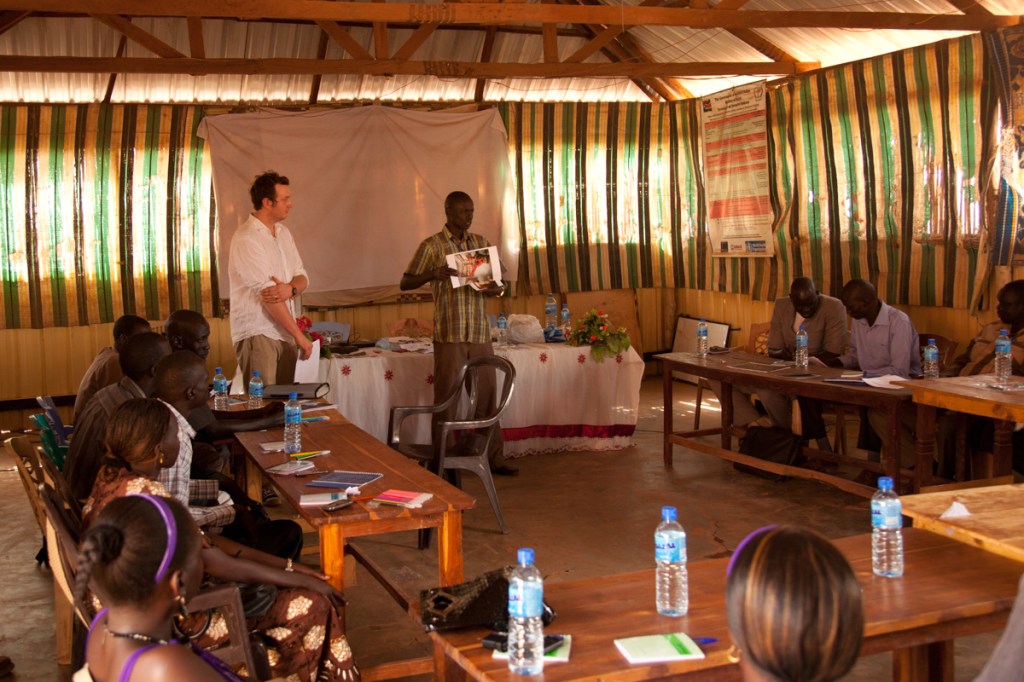
After a day training session each participant was given a digital camera and tasked with photographing someone in the community that they felt needed protection. When the participants returned we reviewed the images together and had a group discussion.

The participants returned a range of images that covered a surprisingly diverse and engaging set of topics. Including:

Photographer: Local police officer
Many children are either orphaned or abandoned during conflict. These children are often left to fend for themselves on the streets of Kuajok. Local police have become frustrated that they are forced to arrest and punish street children for stealing food

Photographer: Local police officer
Many children are orphaned or abandoned during conflict. This child has been caught stealing food and beaten by a local shop keeper. Police are frustrated with lack of support for these vulnerable children.
A participant who was a policeman decided to document the struggle of children displaced by the conflict who had no family to help and support them, they are regularly forced to steal food form the market to survive. He photographed the young boys after they had been caught by police and beaten. The policeman found the situation distressing, as he was also forced to catch and punish these young people, although he knew what they really needed was support that is not available. The community elders taking part were surprised to hear that the police were uncomfortable with arresting and punishing young people who had no choice but to steal food, conversely the police were grateful for a forum in which they could share their frustrations and show that they understood the complexities of the situation.

Photographer: Local Community Leader
Many child soldiers suffer from mental illness, with limited or no access to general healthcare mental health provision is a low priority.
A participant who was a soldier photographed an ex-child soldier who was suffering with serious mental health problems due to trauma from the conflict. In a country with a long history endemic conflict and no support for ex-combatants this is a common situation.
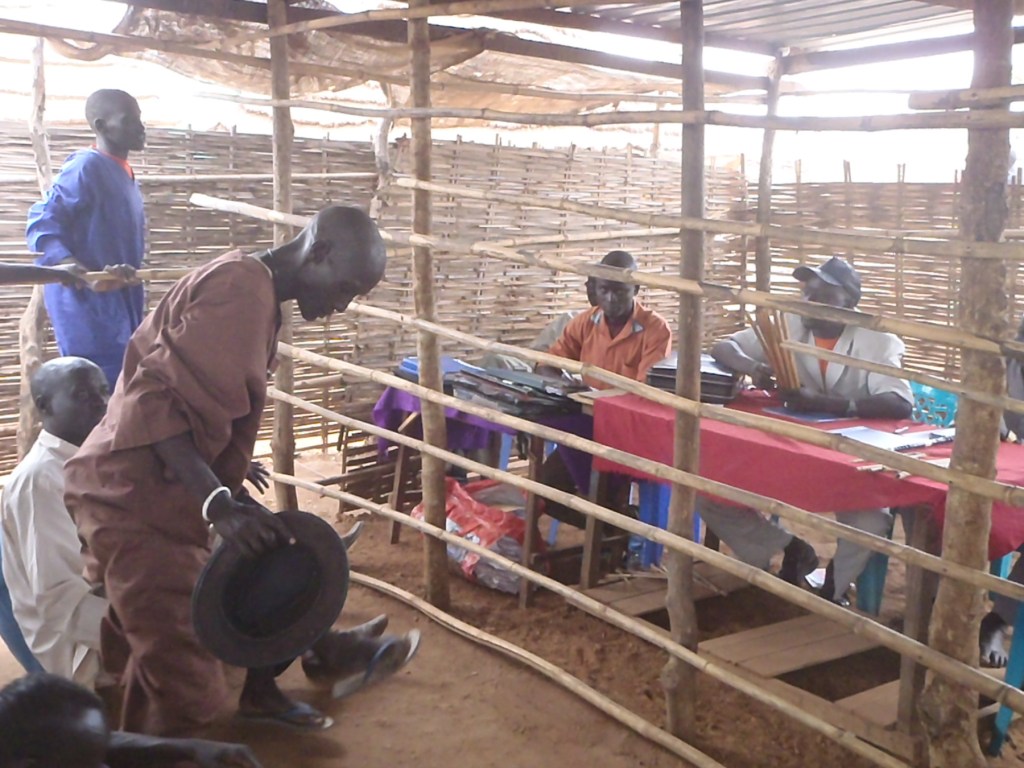
Photographer: Local female journalist
Access to justice is a major challenge in these communities, many perceive the local courts to favour certain ethnic groups. Attitudes towards gender equality are a contentious issue, with many women being regarded as the property of their fathers or husbands
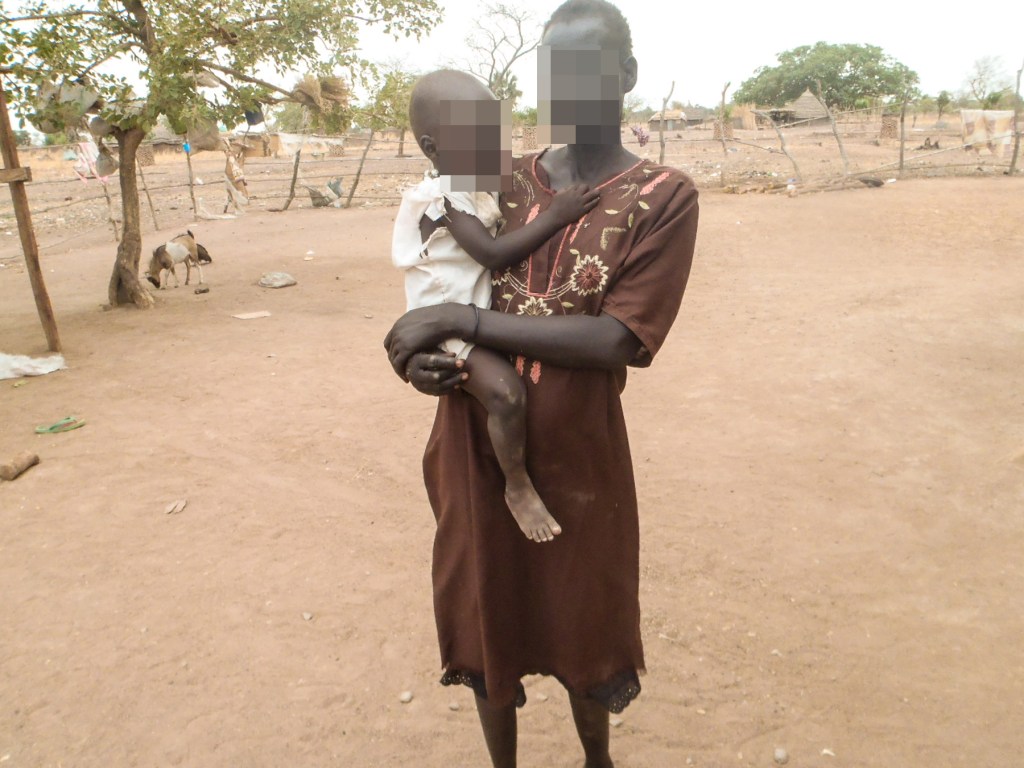
Photographer: Local female journalist
Local courts frequently imprison the wives of men who fail to honor dowry payments. These women are incarcerated the local jail, often with young children, with little access to resources such as food and medical supplies.

Photographer: Local female journalist
Local courts frequently imprison the wives of men who fail to honor dowry payments. These women are incarcerated the local jail, often with young children, with little access to resources such as food and medical supplies.
A female journalist who was a participant photographed women who were being imprisoned because their husbands had not paid the marriage dowry due to the family, the journalist had been trying to raise awareness of this injustice. When she explained the injustice in women being imprisoned to punish their husbands there was a discussion about how matters of gender equality could be approached in the community, the images themselves formed the central point of these discussions.
Each of these complex issues would have been very hard to identify and research as an outsider, let alone negotiate access to photograph them. Through this project the participants were able to identify the key issues that were important to them, create images to evidence them and present their findings to stakeholders within the community, using creativity and dialogue to work towards peaceful resolutions.

 Martin and Martin